Most leads go cold in your inbox. Warm them up before you ask.
Sabri Suby's Magic Lantern is simple: before you ask a new lead to buy, you teach them two or three useful things in a row. Here's how it works and where founders slip.
I've been re-reading Sabri Suby's Sell Like Crazy, and there's one part I keep coming back to. It's step 6 of his eight-step selling system. He calls it the Magic Lantern Technique.
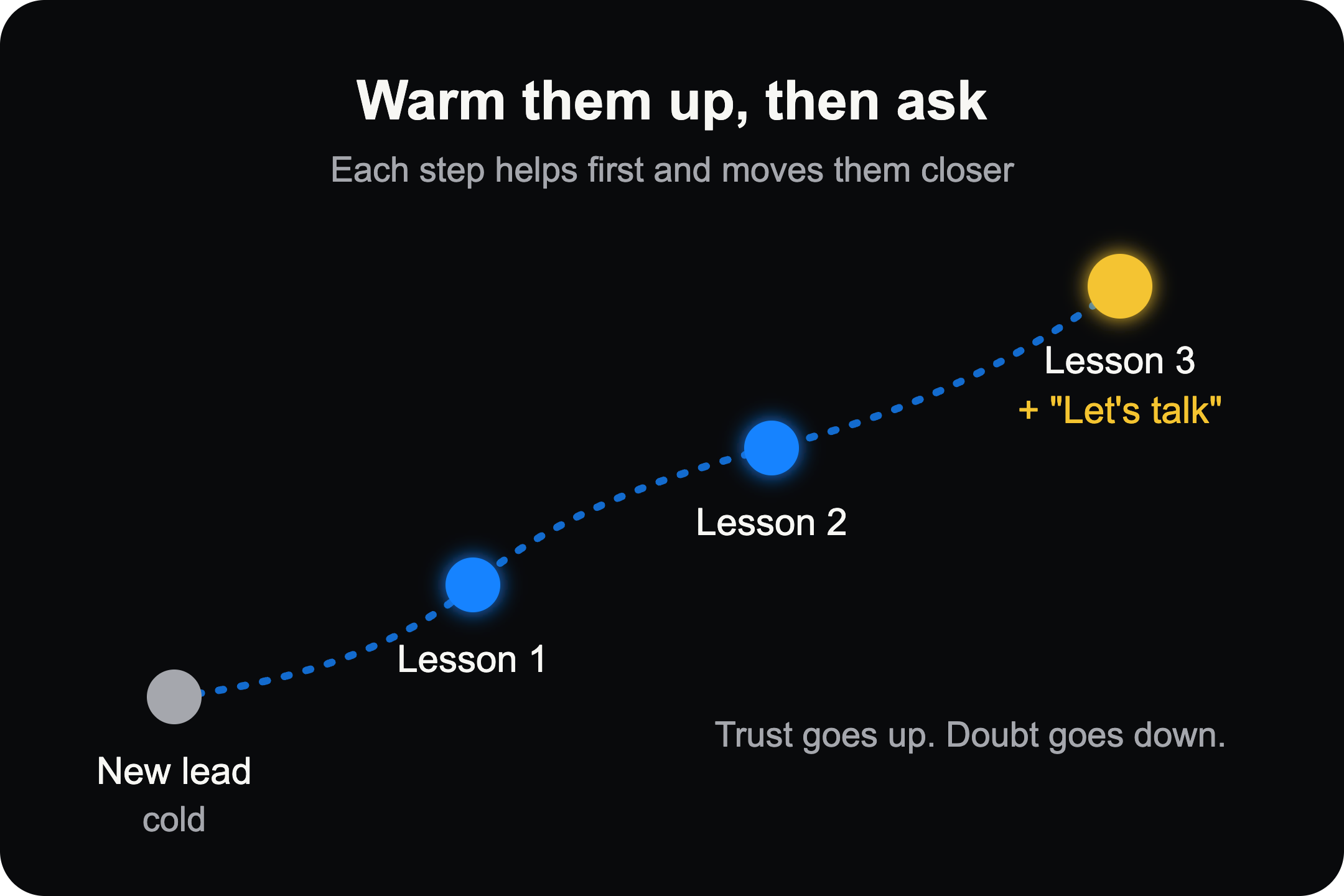
Strip away the fancy name and it's simple. Someone gave you their email. Before you ask them to buy, you teach them something useful. Then a bit more. Then you invite them in.
That's it. And most of us skip it.
Here's what usually happens
A person downloads your free guide. Their name lands in your inbox. And then? Either nothing, or a "ready to buy?" email two days later.
Let's be real. Neither works. One is silence. The other is asking for marriage over the first cup of chai.
So the lead goes cold, and we tell ourselves the leads were bad. Most of the time, they weren't. They just needed a little more before they felt safe saying yes.
What the Magic Lantern really is
First, get clear on where your buyer is today and where they want to reach. Then make two or three short pieces (Suby suggests videos) that each move them one step along that road.
Each piece is pure help. No hard sell inside it. At the end comes one simple invite: if this helped and you're serious about the result, book a time with me.
Suby says this helps "build goodwill and trust, whilst reducing scepticism." All three at once. That's kind of a big deal, because doubt is the real wall between a lead and a sale.
He also shares a smart shortcut. Take your best sales pitch, or the questions buyers ask you again and again, and turn them into these pieces. Once they're made, they keep working on their own.
Think of the mithai shop
One example Suby uses is a PR consultant. One piece is a guide to what you should never say to an influencer. Another is a ready-made template to pitch influencers yourself. The prospect isn't just reading. They're doing the work, step by step, and getting small wins with you.
Here's the picture I use. Think of the mithai shop near your house at Diwali. The owner breaks off a piece of kaju katli and hands it over before you've said a word. You taste it. Now buying a box isn't a gamble. It's a no-brainer.
The Magic Lantern is that free piece, handed over two or three times, each one a little better than the last. You're showing your skill instead of talking about it.
Don't ask a stranger to buy. Teach them first, and they stop being a stranger.
Where founders get it wrong
Three slips kill this.
First, the "help" is a sales pitch in disguise. People smell it, straight up. If a piece can't stand on its own as useful, it's not ready.
Second, the pieces jump around. Each one should follow the last, like steps on a staircase, not random tips.
Third, no ask at the end. Suby's sequence always ends with an invite. Giving value forever and never asking isn't warming up a lead. It's a free course. Chalta hai? Not really.
Try this week
Write down the three questions every buyer asks you before they pay. Record a short phone video answering each one, under five minutes each. Send them to your newest leads, one every two days, and end each with one line: "If you want help with this, reply and let's book a call."